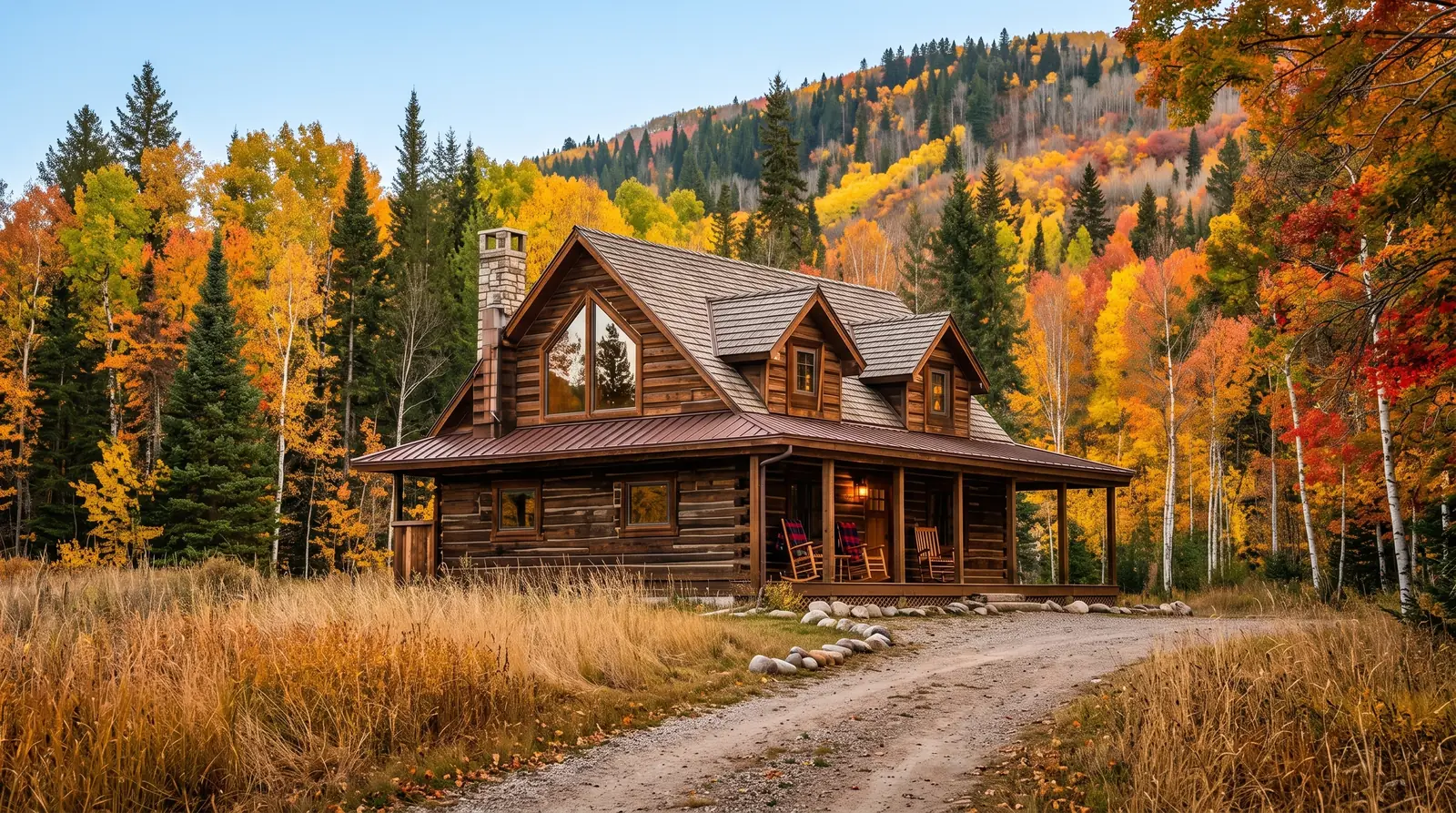
Every fall, cottage owners face the same choice: keep the place heated through the winter, or drain the water, turn everything off and walk away until spring. Both can work. Both can go badly wrong if they’re done halfway. Here is how to think through the decision for a cottage in Tiny Township, Penetanguishene, Midland or Tay.
The two approaches
Heated (sometimes called “heat on, water on” or “heat on, water off”). The cottage stays above freezing all winter, usually at a low setting. Water may stay on so you can visit, or be shut off and drained as a backup.
Fully winterized (drained). The heat is turned off. The water system is shut off and drained, traps and toilets are protected, and the cottage is left to freeze safely until spring.
There’s also a middle option some owners use: low heat with the water shut off and the lines drained. It costs more than a cold shutdown but protects against a single point of failure.
Option 1: Keep the heat on
When it makes sense
- You plan to visit in winter for skiing, snowmobiling or holidays
- The cottage is insulated and built for year-round use
- There’s reliable year-round road access and plowing
- Someone can check on it regularly
The upside
- You can drop in any weekend without a full opening
- Finishes, furniture and stored items aren’t exposed to deep cold
- Fewer surprises with cracked fixtures in spring
The risk
A heated cottage with water on is only safe as long as the heat stays on. If the power goes out in a storm, the furnace fails, the propane runs out or a baseboard heater trips, the place can freeze. Frozen pipes that burst while water is still on can flood a cottage for days before anyone notices.
That’s why a heated cottage needs:
- A reliable heat source, serviced before winter
- A plan for fuel deliveries if you’re on propane or oil
- A low-temperature alert that texts you if the inside drops too far
- Regular in-person checks, especially after storms and outages
- A main water shut-off that you or a checker can reach quickly
Option 2: Drain it and shut it down
When it makes sense
- The cottage is a three-season building with little insulation
- The road isn’t plowed, or access in winter is difficult
- You won’t visit between Thanksgiving and spring
- You’d rather not pay to heat an empty building
The upside
- No heating bill for an empty cottage
- Nothing to fail if the power goes out
- A properly drained system has no water left to freeze and burst
The risk
Draining only works if it’s done completely. A low spot in a line, water left in a pump or pressure tank, a toilet tank not fully emptied or a trap without protection can all freeze and crack. Many cottages in Tiny have lake-fed water lines, jet pumps and older plumbing added over the years, so knowing every valve and drain point matters.
A drained cottage still needs checks. Snow load on the roof, fallen trees, break-ins and animals don’t care whether the water’s off. See how often to check your cottage in winter for a sensible schedule.
Side by side
| Heated | Drained | |
|---|---|---|
| Winter visits | Easy | Not without re-opening |
| Ongoing cost | Heat, fuel, power | Very low |
| Biggest risk | Heat or power failure with water on | Incomplete draining |
| Checks needed | Frequent | Regular, especially after storms |
| Spring opening | Simple | Full re-commissioning of water system |
Check your insurance first
Before you decide, read your cottage insurance policy or call your broker. Many policies have conditions for seasonal or unoccupied properties. They may require the heat to be kept at a set temperature, the water to be shut off and drained, or someone to check the property at set intervals. If those conditions aren’t met, a claim for freeze damage could be refused.
Get the answer in writing if you can, and keep a log of checks over the winter.
Things that affect the choice locally
- Tiny Township: many cottages along Balm Beach, Wymbolwood and Cawaja were built as summer places and are on private wells, lake lines and septic systems. Plenty are best fully winterized. Year-round conversions are a different story. See the Tiny Township area page.
- Penetanguishene: cottages on the Penetang Peninsula and the west shore are often reached by long private lanes. If the lane isn’t plowed, a heated cottage is hard to check after a storm. See the Penetanguishene area page.
- Midland and Tay: many places around Midland Bay, Victoria Harbour and Waubaushene are year-round homes or close to it, with plowed roads and neighbours nearby. Heating through winter is more practical here, though checks still matter. See the Midland area page.
If you drain: what has to happen
A full drain-down usually covers:
- Turning off the pump and the main water supply
- Opening every tap, inside and out, and draining from the lowest point
- Draining the water heater, pressure tank and pump
- Blowing out lines with compressed air where possible
- Emptying toilet tanks and bowls
- Adding non-toxic plumbing antifreeze to traps and toilets
- Disconnecting or pulling the lake intake line where there is one
The full list, including appliances and the exterior, is in the cottage closing checklist. The cottage closing page explains what is usually included when it is hired out.
If you heat: a pre-winter checklist
- Service the furnace, boiler or heat pump before you leave
- Top up fuel and set up automatic delivery if possible
- Set the thermostat to a safe low setting, not the lowest number on the dial
- Leave cabinet doors under sinks open on outside walls
- Install a low-temperature and power-outage alert
- Know where the main shut-off is, and make sure your checker does too
- Consider shutting the water off anyway when you leave, and draining the lines
Quick answers
Is it cheaper to heat a cottage or winterize it?
Fully winterizing is usually cheaper over the season, since you aren’t paying to heat an empty building. Heating makes sense if you’ll use the cottage in winter and it’s built for year-round use.
What temperature should I leave my cottage at over winter?
There’s no single right number. Check your insurance policy first, since many set a minimum. Set it high enough that inside walls and plumbing stay above freezing, not just the room with the thermostat.
Can I keep the heat on and still drain the water?
Yes, and many owners do. Low heat with the water off and drained gives two layers of protection. If the heat fails, there’s no water in the lines to freeze and burst.
Related services
 Cottage closing & winterizingWater shut off, lines and fixtures drained, antifreeze where needed, and appliances prepped for winter.
 Winter property checksRegular drive-bys and walk-throughs with photos, plus a call if anything looks wrong.
 Spring openingWater back on and checked for leaks, systems started, and the place aired out before you arrive.